OnlyFans Agency Scam Red Flags: A Creator Safety Checklist
A non-explicit checklist of agency red flags for OnlyFans creators, covering fake guarantees, account takeover risk, payout control, contracts, and unsafe promotion.
Regulation & Compliance
Some creator agencies are legitimate businesses. Others use pressure, fake income claims, vague contracts, or account-control tactics that can leave creators with lost revenue, damaged profiles, exposed personal information, or content-rights disputes.
This guide is general safety and business education. It is not legal, financial, employment, tax, or platform-policy advice. If an agency offer involves account access, content rights, large fees, exclusivity, or payout control, get professional review before signing.
The Short Version
Walk away or pause for review when an agency:
- Guarantees a specific income result without evidence and conditions.
- Demands full account credentials before a contract is reviewed.
- Wants control over payout settings or banking details.
- Refuses to name the legal entity behind the offer.
- Pressures the creator to sign immediately.
- Avoids written terms for fees, access, content rights, and termination.
- Uses fake testimonials, copied screenshots, or unverifiable case studies.
- Encourages spam, impersonation, misleading messaging, or policy violations.
- Says legal review is unnecessary.
A good agency can explain its process calmly. A risky operator usually needs urgency, secrecy, or confusion.
Red Flag Matrix
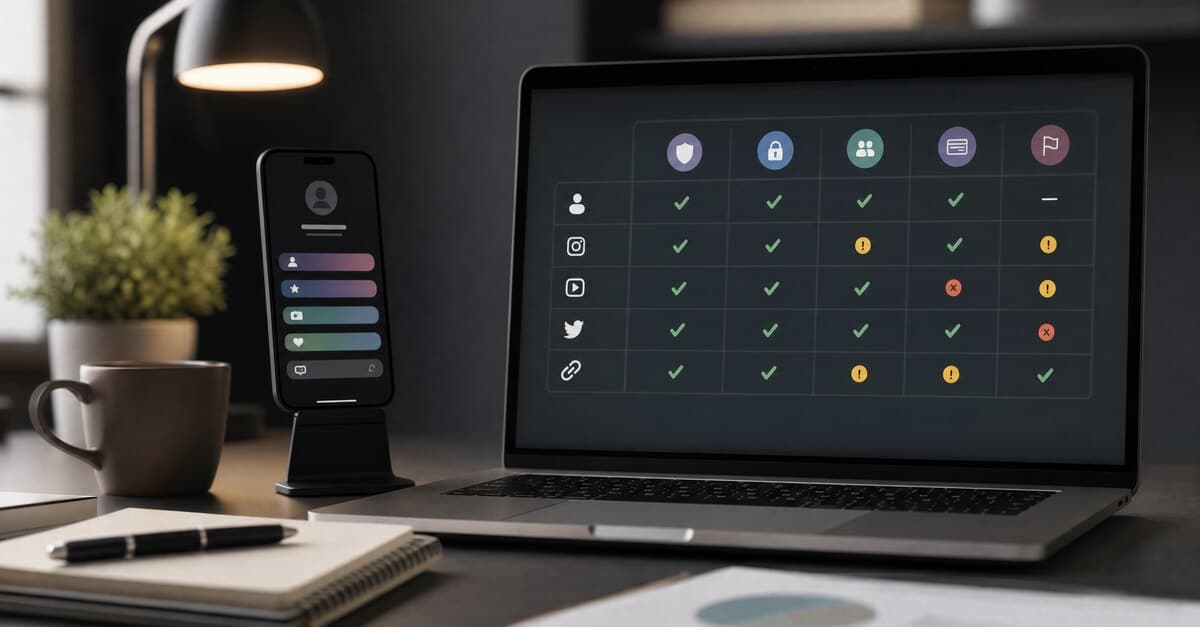
| Red Flag | Why It Matters | Safer Response | |---|---|---| | "Guaranteed $10K/month" with no conditions | Income depends on audience, content, pricing, retention, promotion, and policy constraints | Ask for assumptions, scope, and written disclaimers | | Full login required immediately | Account access can affect messages, content, pricing, and reputation | Discuss role-based access and contract terms first | | Payout settings access | Banking changes can redirect funds or create tax-record problems | Keep payout controls with the creator | | No legal company name | The creator may not know who is responsible | Request legal entity, address for notices, and signer details | | Vague revenue share | Fees may apply to revenue the agency did not create | Define gross, net, refunds, chargebacks, and legacy subscribers | | No termination clause | Creator may be stuck or face unclear exit costs | Require cancellation and access-return terms | | "We own the strategy" | Overbroad IP claims can restrict future operations | Separate process templates from creator content and accounts | | Unsafe promotion | Spam or deceptive claims can damage platform standing | Require policy-compliant marketing rules |
Account Takeover Risk
The most serious agency scams often start with access. Once someone has broad account access, they may be able to change profile copy, message subscribers, alter prices, remove content, export data, or attempt to change recovery details.
Creators should avoid:
- Sharing passwords in direct messages.
- Turning off two-factor authentication for agency convenience.
- Letting an agency use the creator's personal email account.
- Giving contractors access without knowing their names or roles.
- Allowing anyone besides the creator or trusted finance owner to control payouts.
- Leaving old agency access active after termination.
If access has already been shared and the relationship feels unsafe, document the facts, secure recovery email, change passwords, review payout settings, remove connected sessions where possible, and contact platform support through official channels.
Fake Proof And Inflated Case Studies
Screenshots are easy to crop, mislabel, or reuse. A revenue image without dates, cost structure, retention context, and account baseline does not prove an agency can repeat the result.
Ask:
- Was the case study from a creator with an existing audience?
- Was paid promotion included?
- Were refunds, chargebacks, platform fees, and agency fees excluded?
- How long did the result last?
- Is the creator still a client?
- Did the agency have permission to share the case study?
Legitimate agencies may still protect client confidentiality. They should be able to explain methods and limitations without exposing private data.
Contract Pressure
High-pressure signing tactics are a major warning sign. Common lines include:
- "This offer expires tonight."
- "Legal review will only slow you down."
- "Everyone signs this version."
- "We need your login to see if you qualify."
- "You can cancel anytime," while the contract says otherwise.
Creators should read the actual document, not the sales message. If the contract and pitch conflict, assume the contract controls unless a lawyer says otherwise.
Content Rights Problems
Creators should be cautious when an agency asks for broad rights to store, edit, reuse, license, sublicense, or keep content after termination.
Review:
- Who owns raw files and edited files.
- Whether the agency can post content on other sites.
- Whether content can be used in agency ads or case studies.
- Whether old content must be deleted after termination.
- How collaborator consent is documented.
- Whether the agency can use the creator's name, likeness, or screenshots in marketing.
Do not rely on verbal promises for content rights.
Unsafe Growth Tactics
Growth tactics can create platform, privacy, and reputation risk. Be cautious if an agency proposes:
- Mass unsolicited messages.
- Fake creator personas.
- Misleading claims about availability, location, or response time.
- Buying followers or engagement.
- Using scraped contact lists.
- Posting previews without consent or age-review workflow.
- Targeting people who did not opt in to marketing.
- Ignoring takedown or removal requests.
The creator is often the public face of the account, even if the agency caused the problem.
What To Do Before Signing
Use this review workflow:
- Search the agency name, legal entity, founders, and known aliases.
- Ask for a written scope of services.
- Ask who will access the account and what tools they use.
- Review fees against gross and net revenue.
- Require weekly reporting.
- Keep payout controls with the creator.
- Get contract review from a qualified professional.
- Start with a limited term where practical.
- Preserve copies of signed documents, reports, invoices, and access lists.
If a creator is already in a bad agency relationship, focus on account security, records, payment controls, and professional advice before escalating publicly.
FAQ
What is the biggest OnlyFans agency red flag?
The highest-risk red flag is pressure to hand over full account or payout access before the creator has reviewed written terms, verified the legal entity, and understood the exit process.
Are income guarantees always a scam?
Not always, but they should be treated cautiously. A credible forecast needs assumptions, limits, cost context, time period, and written conditions instead of a vague promise.
What should a creator do after sharing account access with a risky agency?
Document what happened, secure recovery email, change passwords, review payout settings, remove unneeded sessions where possible, preserve records, and use official platform support or professional advice when needed.
Can a creator leave an agency immediately?
That depends on the contract and local law. Creators should read the termination clause, preserve evidence, protect access, and get qualified advice before taking steps that could create a dispute.
Get the pulse, weekly.
Platform news, creator economy trends, and industry analysis — delivered every Friday.